Welcome to the Trauma Recovery Institute Resource Center
Whether you're trying to understand how trauma affects the brain, exploring EMDR Therapy, or deciding whether EMDR Intensive Therapy may be right for you, these evidence-informed trauma recovery articles are designed to help you make informed decisions about healing from trauma, anxiety, insomnia, and depression.

How to Calm Your Nervous System After Trauma
Many people believe trauma only affects someone immediately after a frightening or overwhelming experience.
Continue Learning

How to Calm Your Nervous System After Trauma: 7 Science-Backed Techniques
If you've been stuck in fight-or-flight, these research-backed tools can help you find calm again. How to calm your nervous system: 7 techniques trauma survivors can use right now. Why "Just Calm Down" Doesn't Work for Trauma Survivors. If you've ever been told to "just calm down" or "just relax" when you're overwhelmed by trauma symptoms, you know how frustrating and impossible that advice feels. It's not that you don't want to calm down. It's that your nervous system has been programmed through traumatic experiences to stay in a state of constant vigilance or heightened watchful guard. Your body isn't choosing to be anxious or hypervigilant; it’s doing what it was trained and wired to …
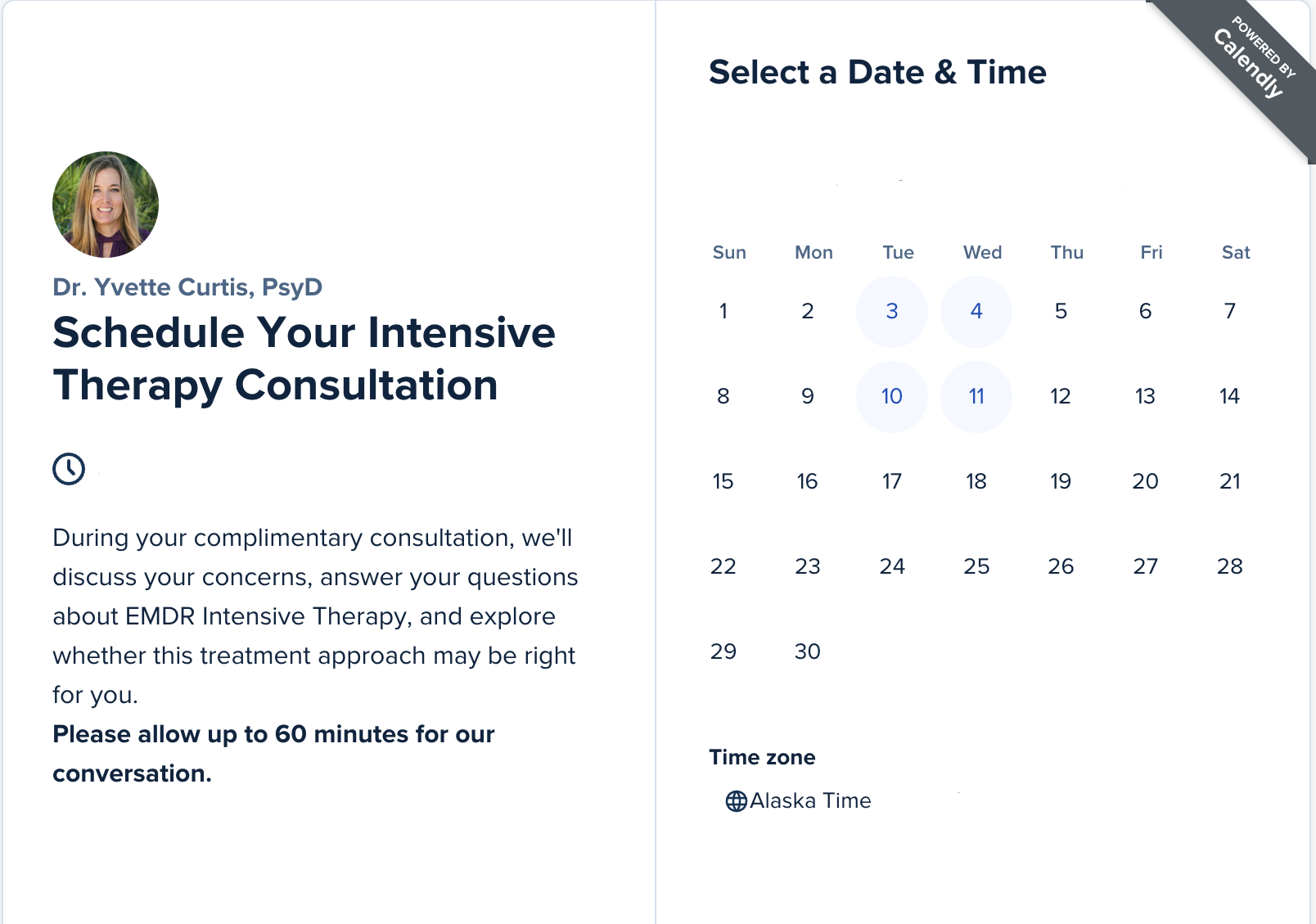
Schedule Your EMDR Intensive Consultation
This complimentary consultation of up to 60 minutes helps us decide together whether EMDR Intensive Therapy is a good fit for your symptoms and goals. There is no obligation to proceed.
During the consultation, we will:
• discuss what has and hasn't worked in previous therapy
• talk through whether intensive therapy is right for you
• estimate how many days your intensive may take
• review the schedule, fees, and logistics
• decide on next steps if we're a good fit
If you choose to move forward, we can schedule your intensive.
Limited intensive availability. Most clients book 2–4 weeks in advance.