Welcome to the Trauma Recovery Institute Resource Center
Whether you're trying to understand how trauma affects the brain, exploring EMDR Therapy, or deciding whether EMDR Intensive Therapy may be right for you, these evidence-informed trauma recovery articles are designed to help you make informed decisions about healing from trauma, anxiety, insomnia, and depression.

How to Calm Your Nervous System After Trauma
Many people believe trauma only affects someone immediately after a frightening or overwhelming experience.
Continue Learning

5 Signs You May Be Ready for EMDR Therapy
Considering EMDR therapy but not sure if it's the right time? Here are 5 signs that indicate you're ready for trauma processing. You've learned coping skills. You can identify triggers. You practice grounding techniques. But you're exhausted from managing symptoms rather than actually healing. You want to process the trauma, not just cope with it forever. If this resonates, you're ready for EMDR. Trauma processing requires some baseline stability: Safe housing situation, Basic financial security, Supportive relationships (at least 1-2 people), Not in active crisis (no imminent danger to self/others), Substance use is under control (if applicable). You don't need a perfect life, but you need enough stability to handle the emotional work of processing trauma…
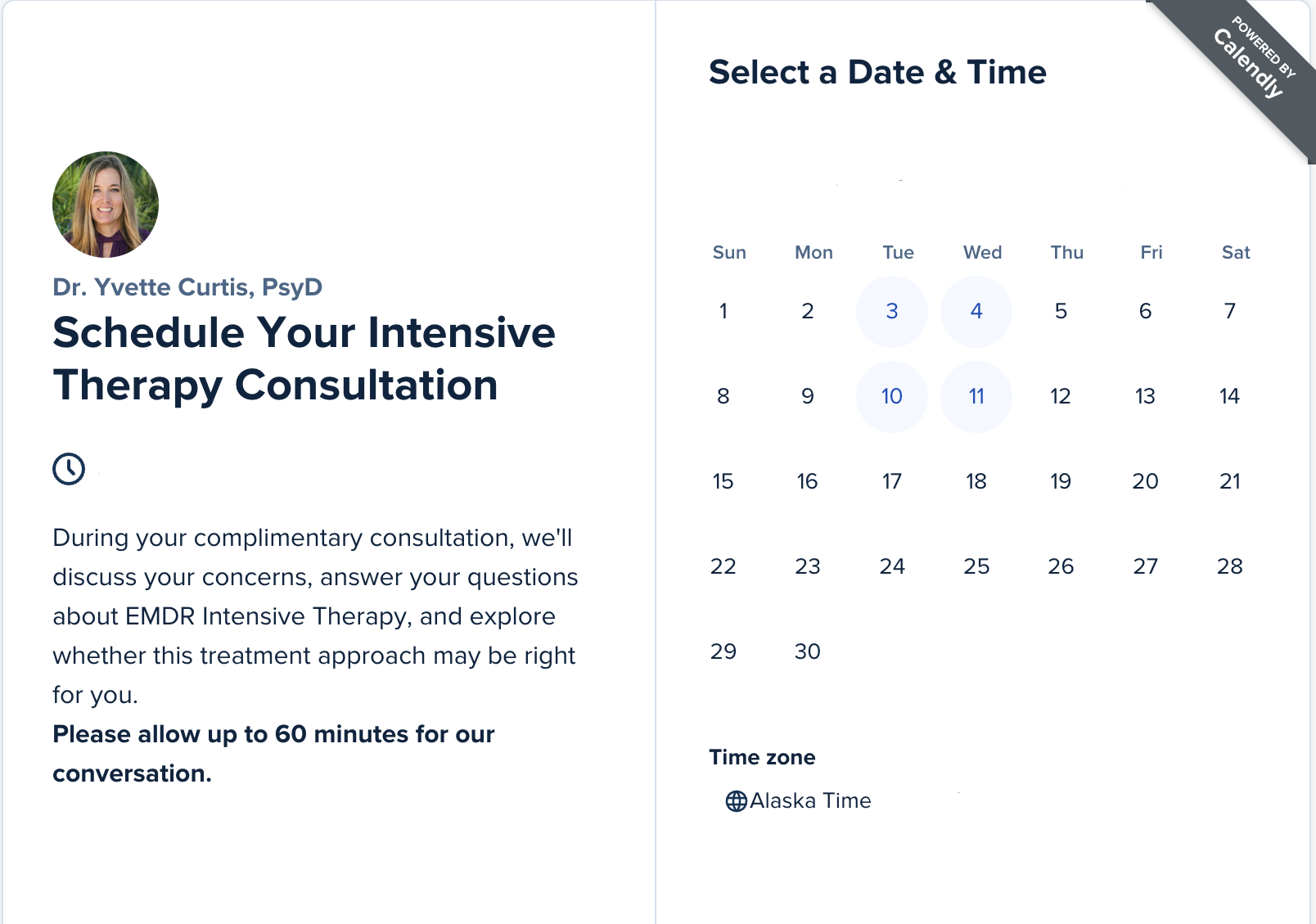
Schedule Your EMDR Intensive Consultation
This complimentary consultation of up to 60 minutes helps us decide together whether EMDR Intensive Therapy is a good fit for your symptoms and goals. There is no obligation to proceed.
During the consultation, we will:
• discuss what has and hasn't worked in previous therapy
• talk through whether intensive therapy is right for you
• estimate how many days your intensive may take
• review the schedule, fees, and logistics
• decide on next steps if we're a good fit
If you choose to move forward, we can schedule your intensive.
Limited intensive availability. Most clients book 2–4 weeks in advance.